Why make a chatbot less relevant?
The chatbot started life helping lost customers find their way around. The new vision was bigger. Catch the problems customers run into and feed them back to the product teams who can actually fix them. Over time it answers fewer questions, because the pages answer them first. Happier customers, more valuable pages.
Engagement was fairly low, so the brief was simple: get more people using it, and find better moments for customers to meet it. Most of that work would land on the Product Detail Page, which was my patch, so I suggested the chatbot team's UX designer and I co-design the whole thing. Two designers pushing back on each other beats one person owning it top to bottom.
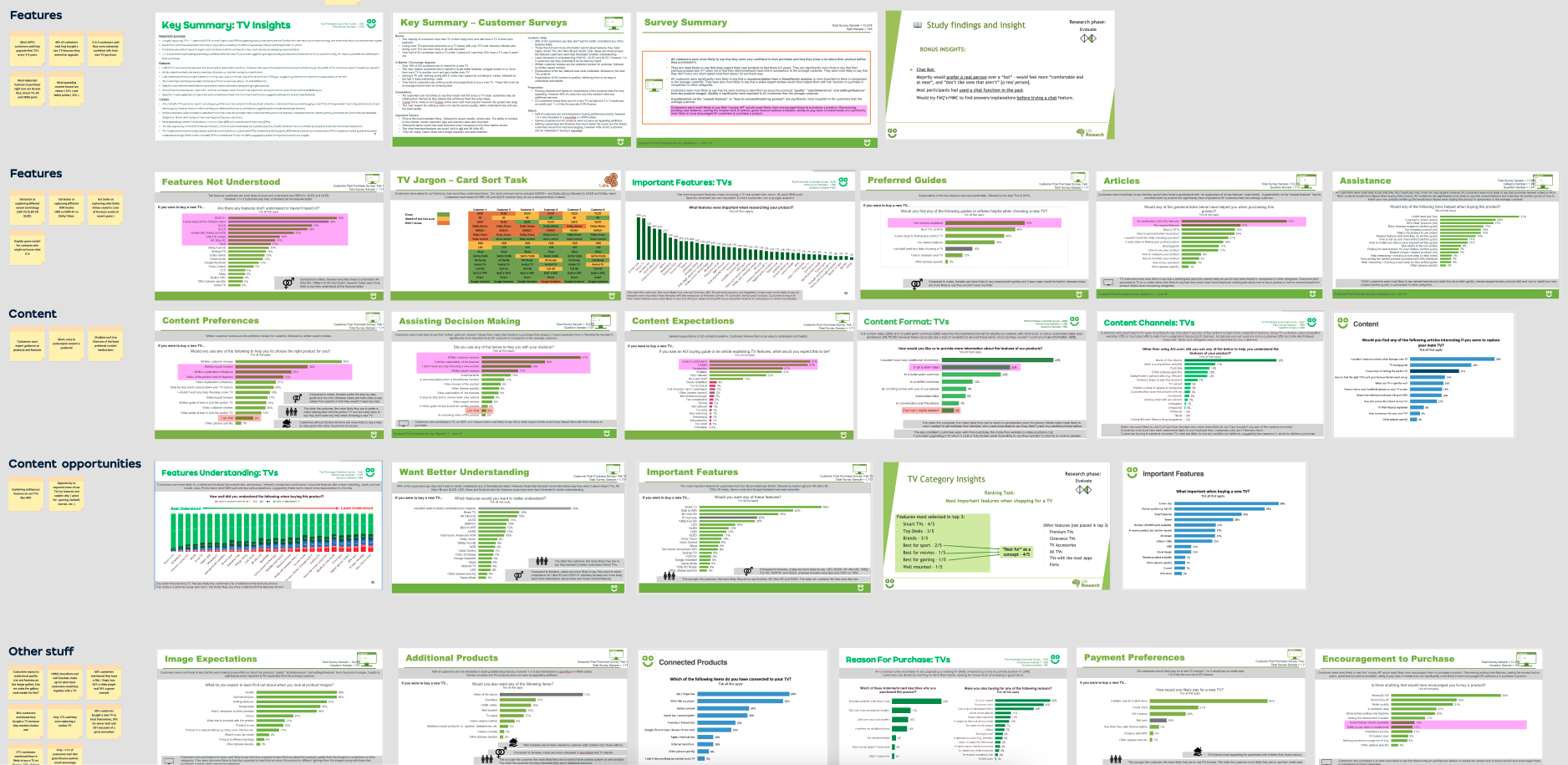
Building on existing insight
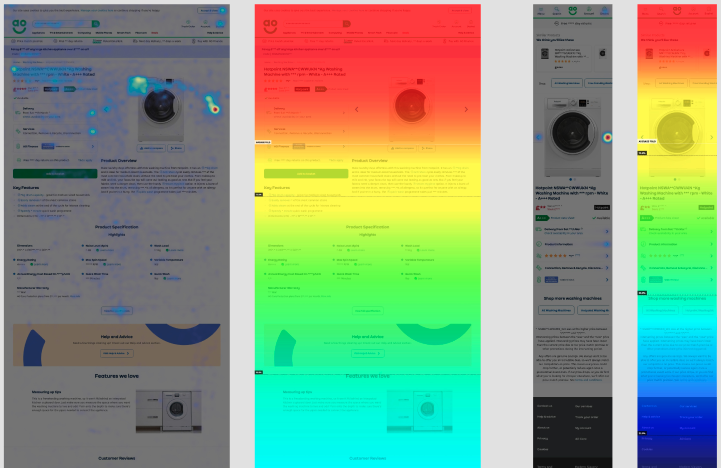
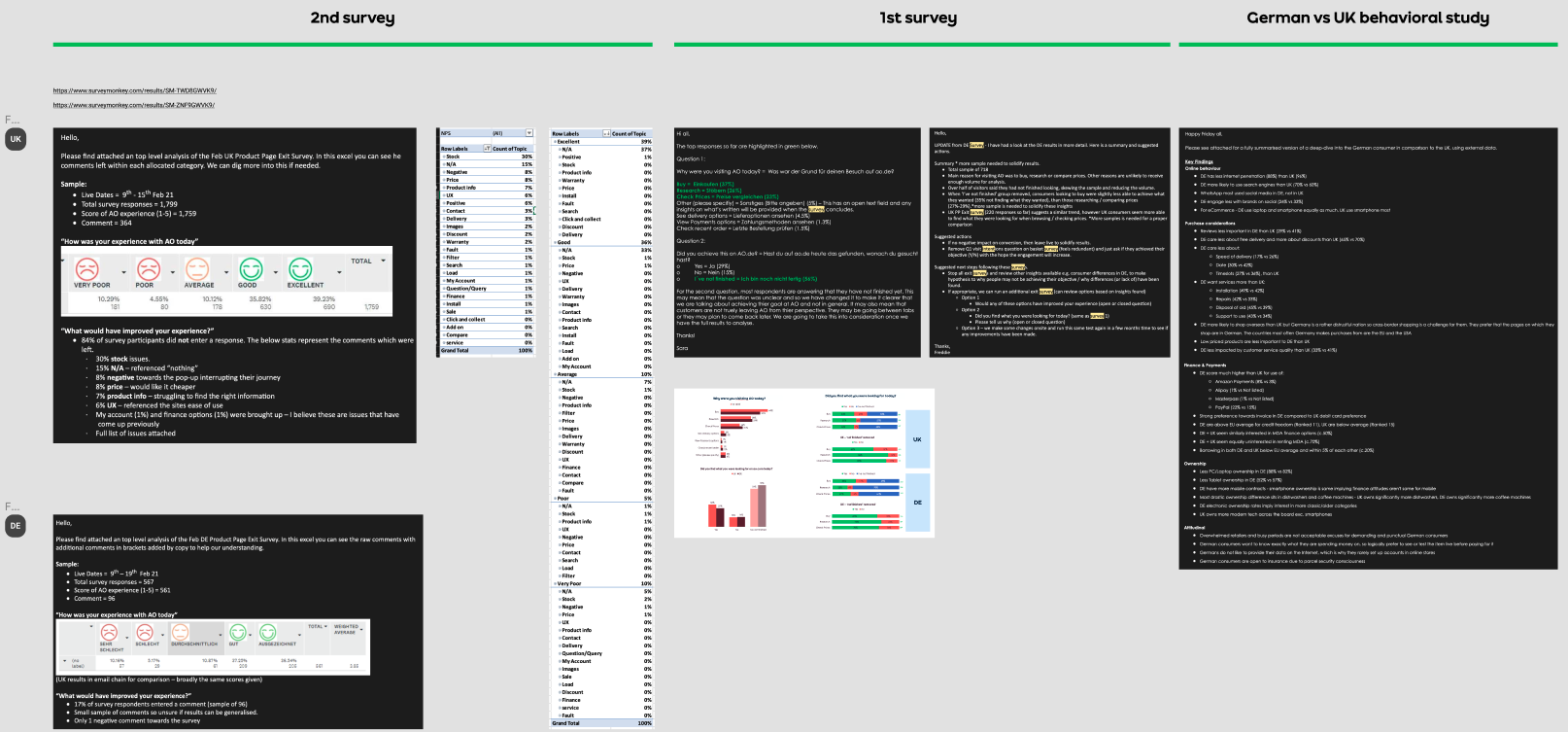
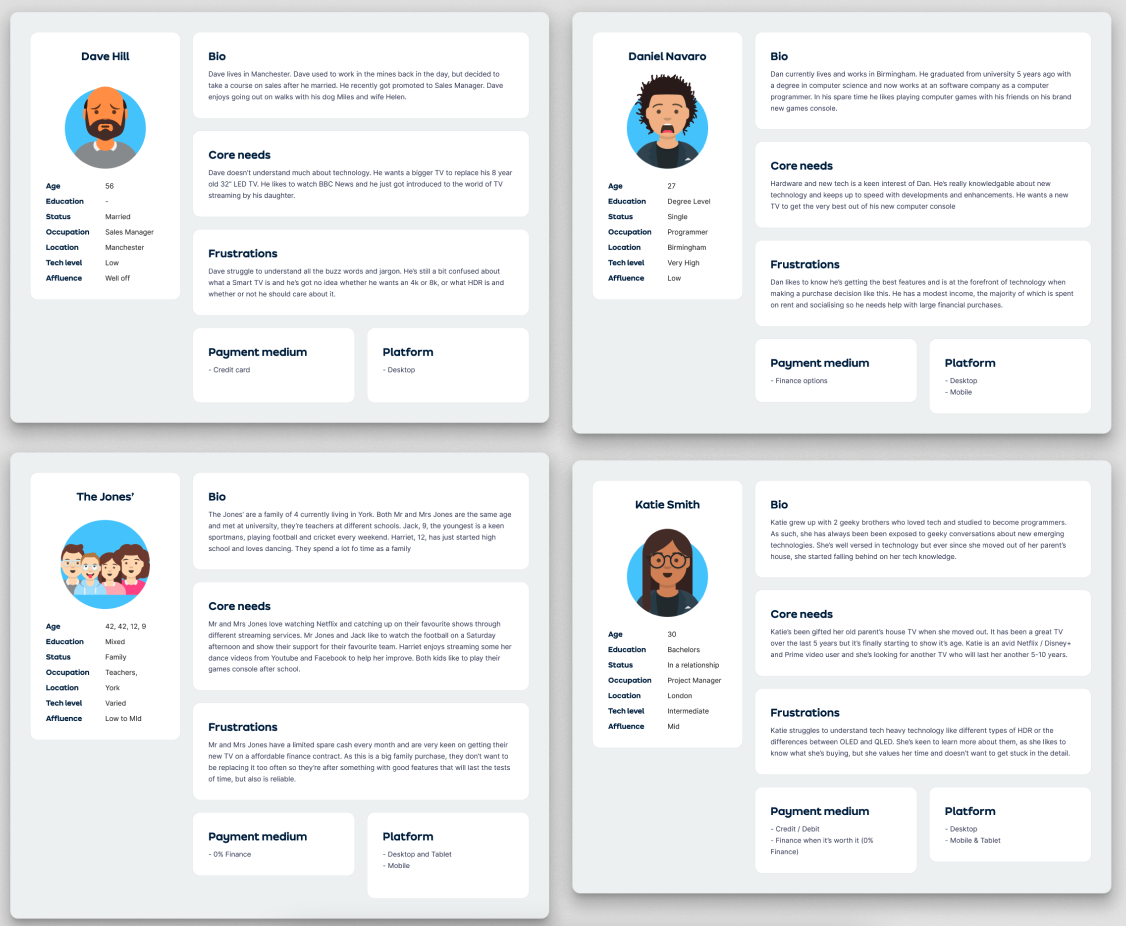
An incoming project made TVs the category where understanding customer problems would pay off most, and we were lucky: there was already a stack of insight on how people shop for TVs. We built on it with heatmaps, a fresh exit-intent survey on why customers were leaving the product page, journey maps split by traffic source, and proto-personas to keep our solutions focused.
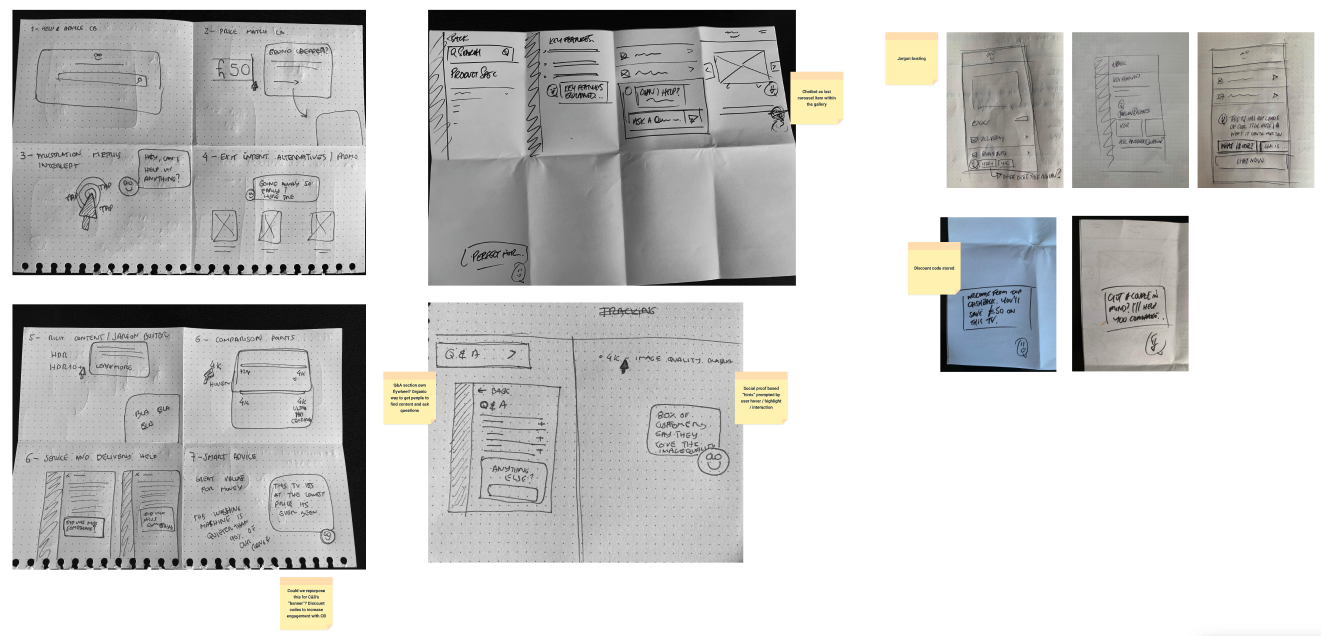
Crazy 8s against the clock
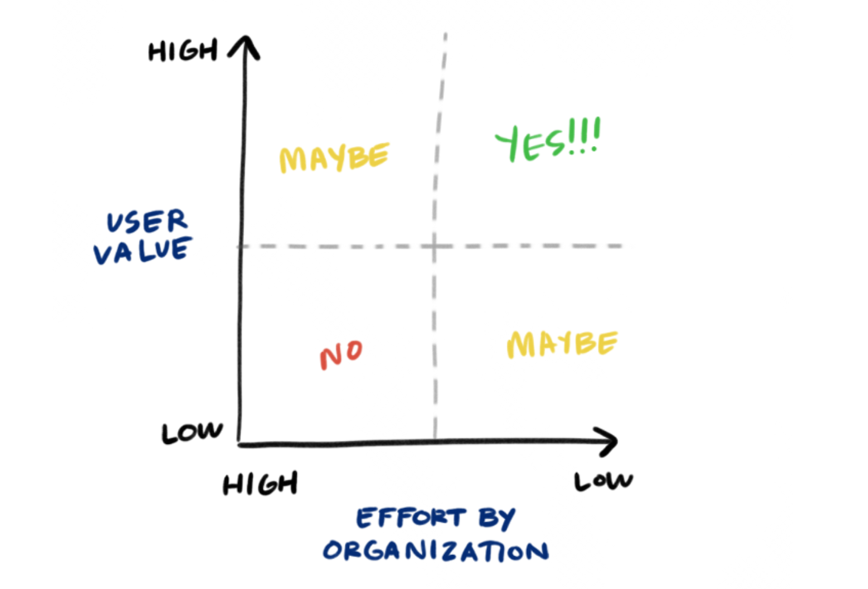
Senior stakeholders needed us to move fast, so rather than a full team workshop we ran tight rounds of Crazy 8s against the research. We took every idea back to the devs to weigh effort against value, plotted them on a prioritisation matrix, and built a roadmap. Easy wins first, the bigger ideas after.
Don't wait for customers to find the chatbot. Read the moment, and offer help right when frustration shows.
Meeting customers in the moment
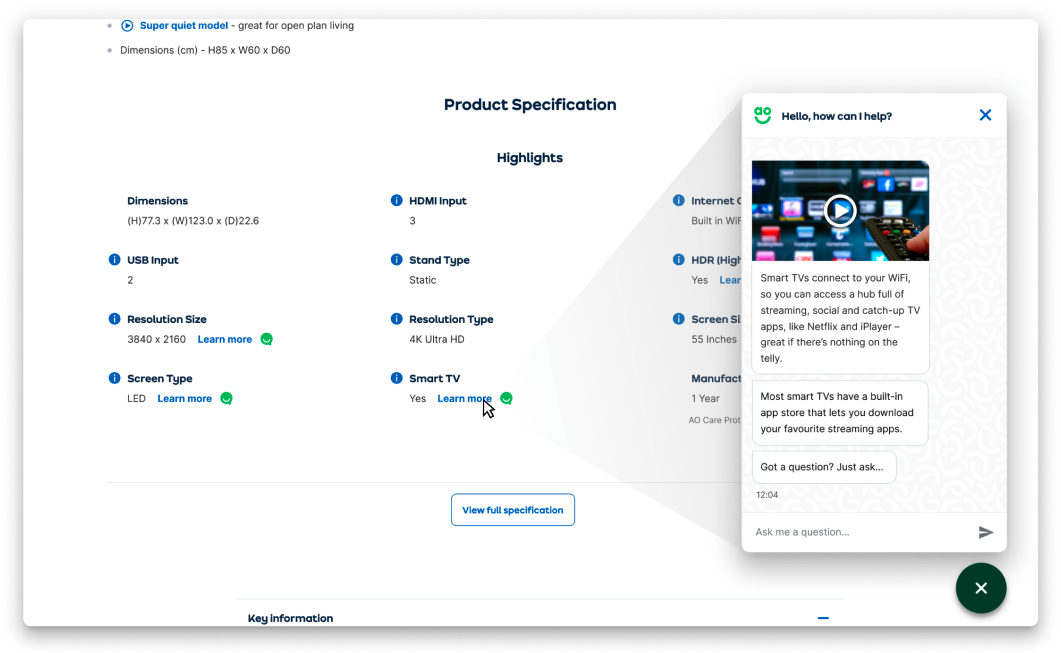
Using our design system, we turned the winning sketches into things we could test:
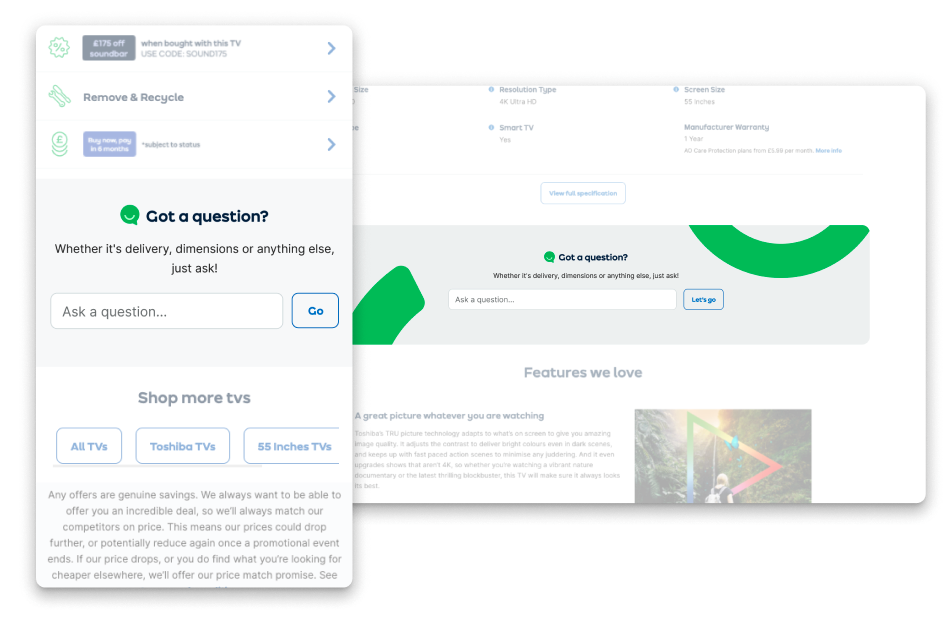
- Hijack the help block. Repurpose the existing help-and-advice block so it takes questions about anything.
- Progressive disclosure. Let customers ask about a specific spec, right where that spec sits.
- A more meaningful icon. Preference-tested until one clearly won.
- Behaviour-based intercepts. Spot the frustration signals and the copy-paste-to-Google moments, then step in with help or our price-match promise.
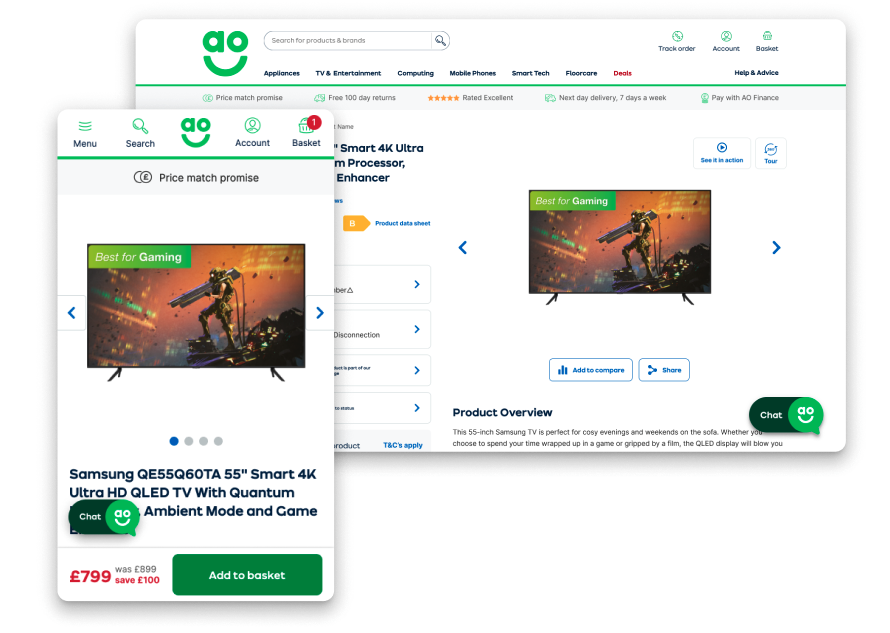
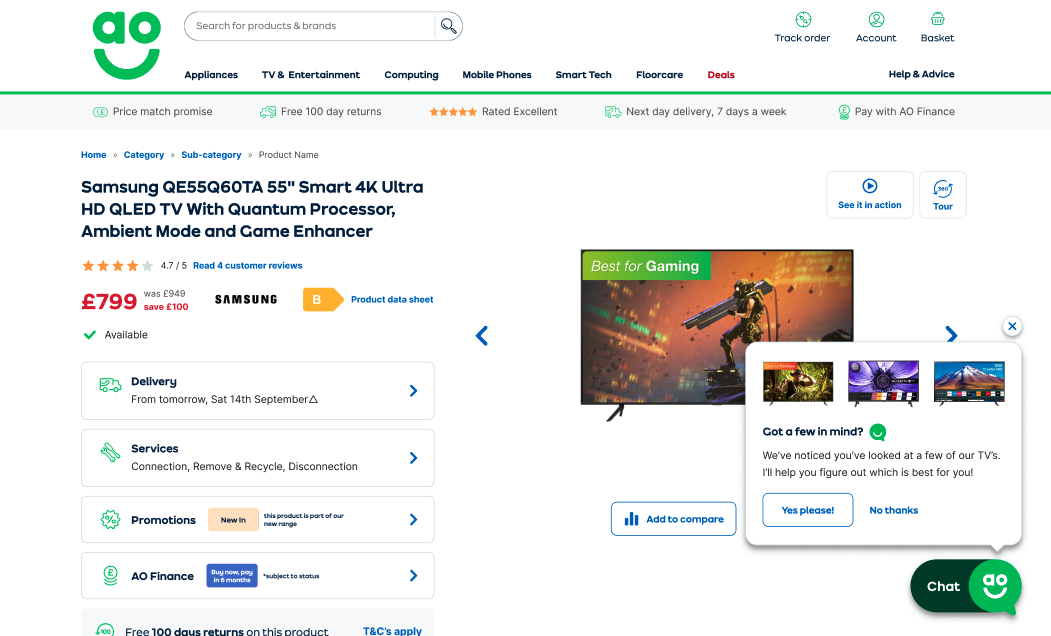
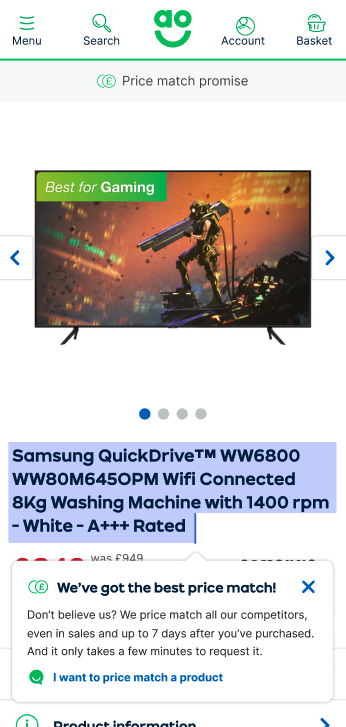
+20% engagement, and a backlog of ideas for later
The early results were genuinely encouraging. A 20% uplift in chatbot engagement on the product page, plus a small bump in conversion. That conversion bump didn't clear the confidence bar we'd set to call it a win, so we didn't claim it.
Then COVID reshuffled everyone's priorities. The rest of the ideas are parked for when the team has capacity, but the foundation and the feedback loop are in place.