
What dealers had before, and why CF247 cared
Used car dealers came to Car Finance 247 for finance, but a lot of them had nothing decent to send a customer to. Some had an old website quietly rotting away. Plenty had no online presence at all. If you are trying to sell a car and arrange finance, that is a real hole.
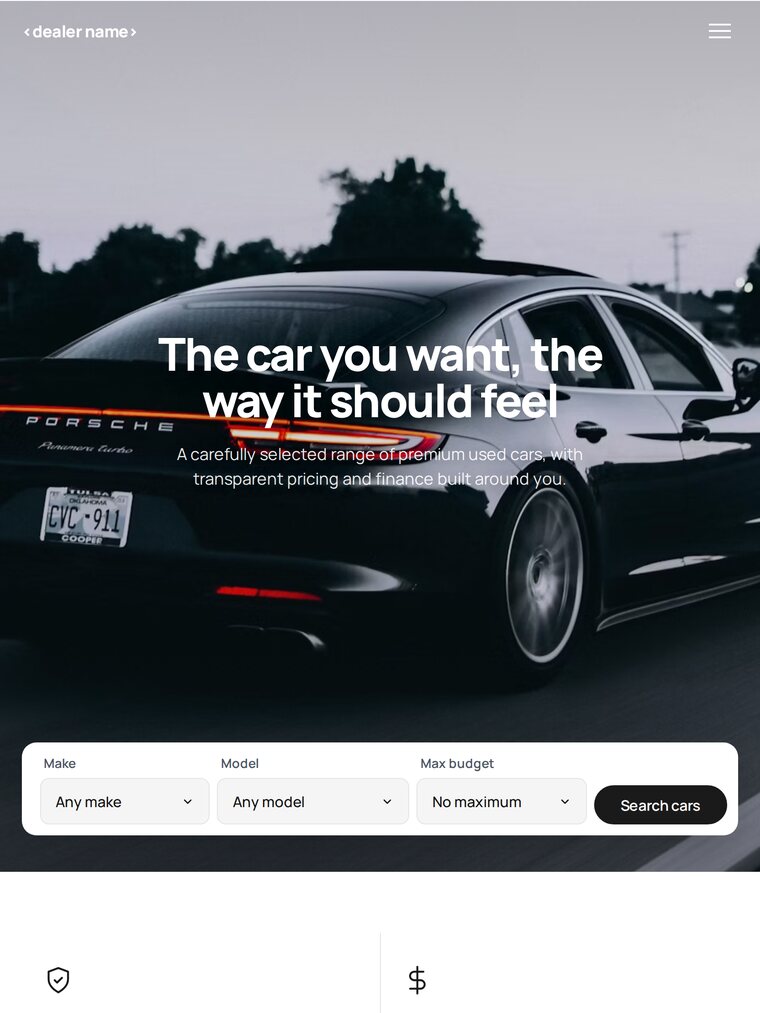
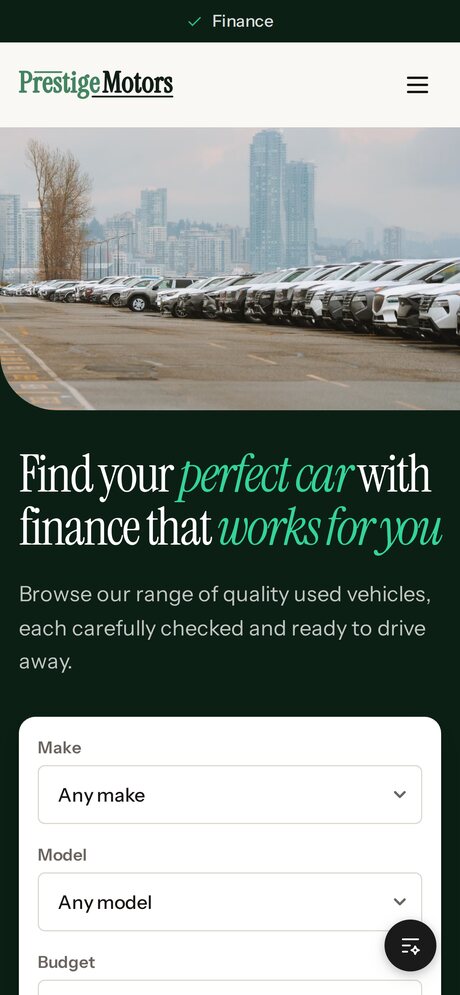
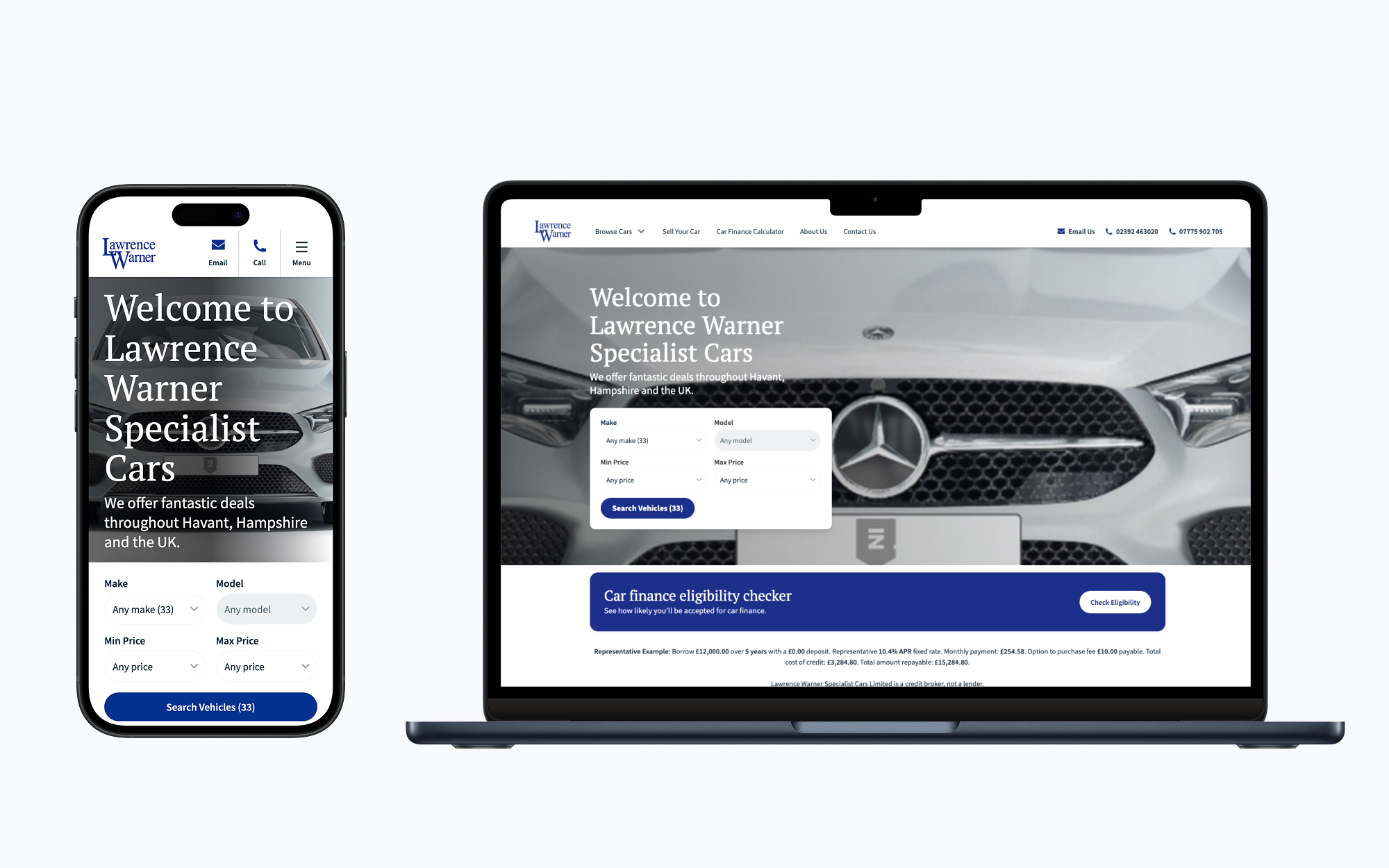
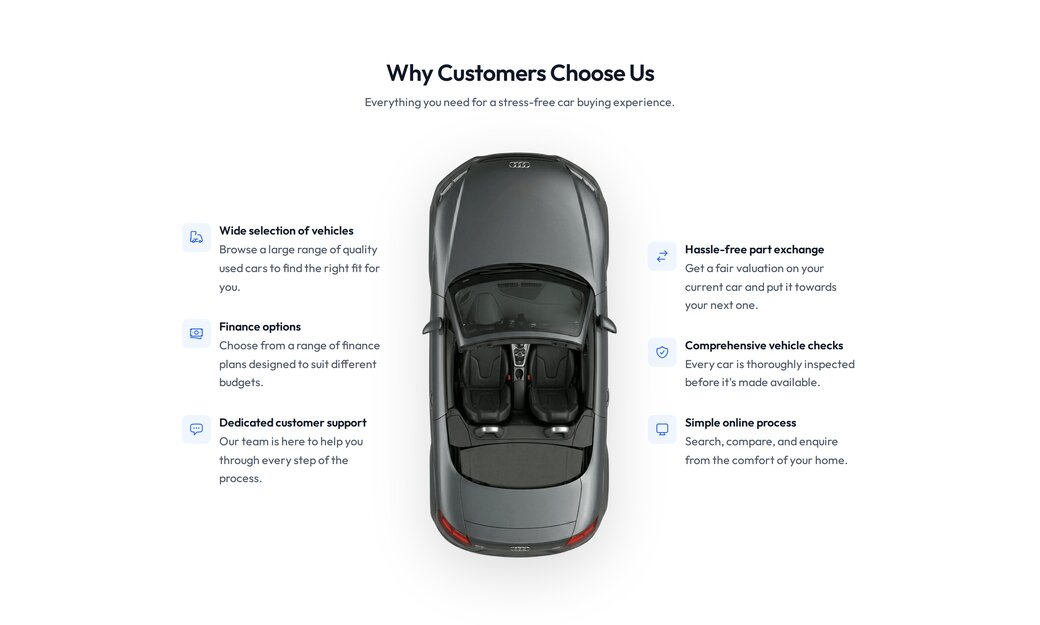
CF247 wanted to fill it with proper websites the dealers could put their own name on. The deal was simple. The standard template was free as long as a dealer sent a referral or two back to CF247 each month. The premium template was the upsell, more features and more polish for a small monthly cost. So the sites had to look good enough that a dealer would be proud to use one, and they had to feed finance applications back to CF247. Both things at once.
When I joined, there was 1 standard template and 3 dealers on it. Building a single template, getting it signed off by Risk and Compliance and then selling it in was close to a 2 month job. That did not scale.
What I owned, and who I worked with
I owned the whole design process. I took the brief, made the design decisions and delivered the finished prototypes to the developers, using an AI agent as part of how I built them. 4 developers handled the refactoring into components, the QA and the analysis, with a BA and a Lead PO keeping the delivery moving. I worked closely with the Risk and Compliance team throughout, because on a finance product nothing goes live without them.
I want to be straight about the title too. This was a Senior Product Design Consultant role, AI Augmented Delivery. The AI part was not a bolt-on. It was how the work got made.
-
1
Brief
The ask from the CF247 stakeholders and the dealers.
-
2
Design & UX research
Decisions made, a working static prototype built.
-
3
Handed to developers
Built into Vue components from the prototype.
-
4
Signed off
Risk and Compliance approve the template, ready for dealers to take live.
One design system that bends to fit many brands
A white label site only works if one system can handle a lot of different brands without breaking. The themes were already living in Storybook, managed by the team, so I followed the structure they had in place rather than inventing my own. A dealer's brand came down to the tokens: colours, type, spacing, shadows and radii, all as variables. Working inside their system kept everything reusable and consistent, and it meant a new brand was a change of tokens, not a rebuild of the page.
On the standard templates a dealer had full control of the tokens, the images and the content. The layout stayed fixed. That restriction was the point. It kept every site fast to set up and kept the compliance-sensitive parts where they were meant to be.
The premium tier worked differently. Dealers on premium started suggesting new blocks they wanted, and we built them. That turned into a genuine feedback loop where the template got better because the people using it were asking for real things.
The first few templates were bumpy, and most of that was us working out how to work together. We tried a few setups before one stuck. First we let the AI more or less take the wheel. Then we moved into a Storybook workflow and worked there directly through git. Then we tried having me build the Vue components myself. None of it quite fit. Where we landed was a hybrid: I built the basic static prototypes, and the developers consumed those and built their Vue components from them, following what Storybook and dotCMS needed. Giving them the thing they actually wanted, rather than the thing I assumed they wanted, made the whole handover smoother.
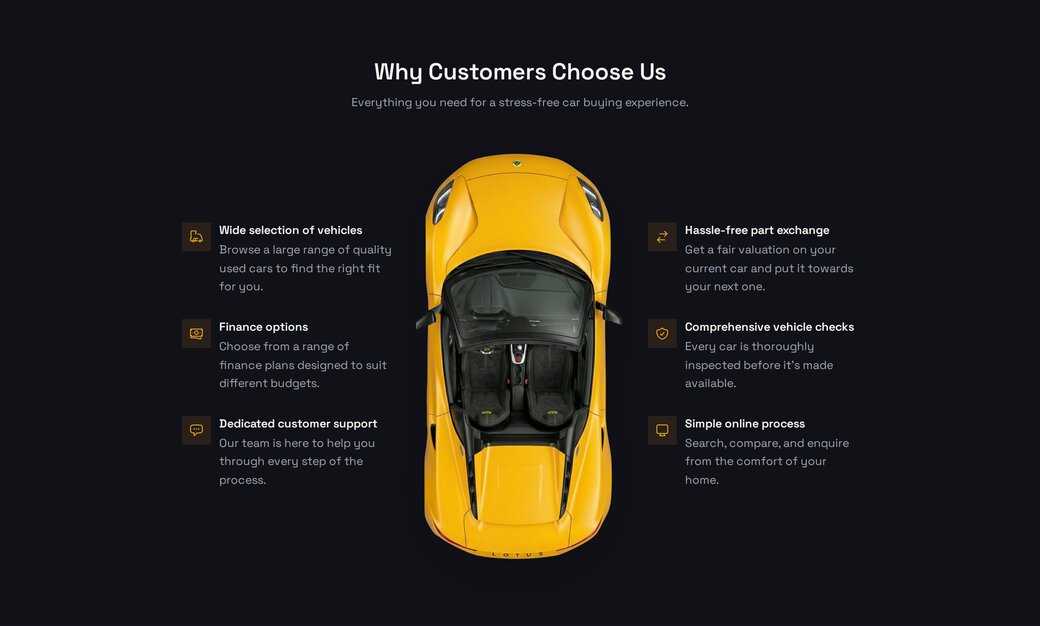
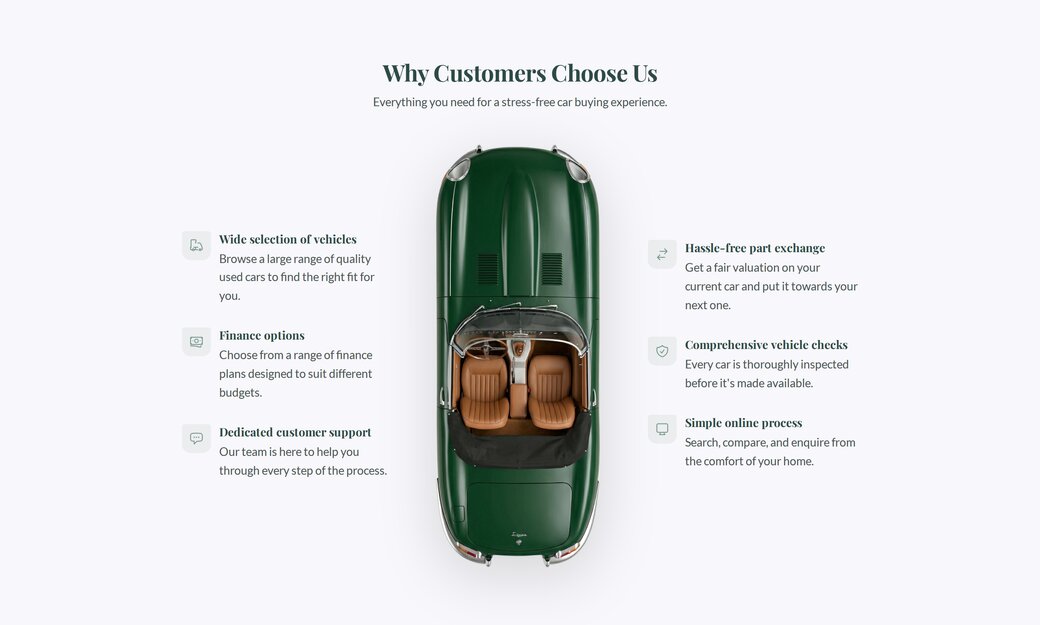
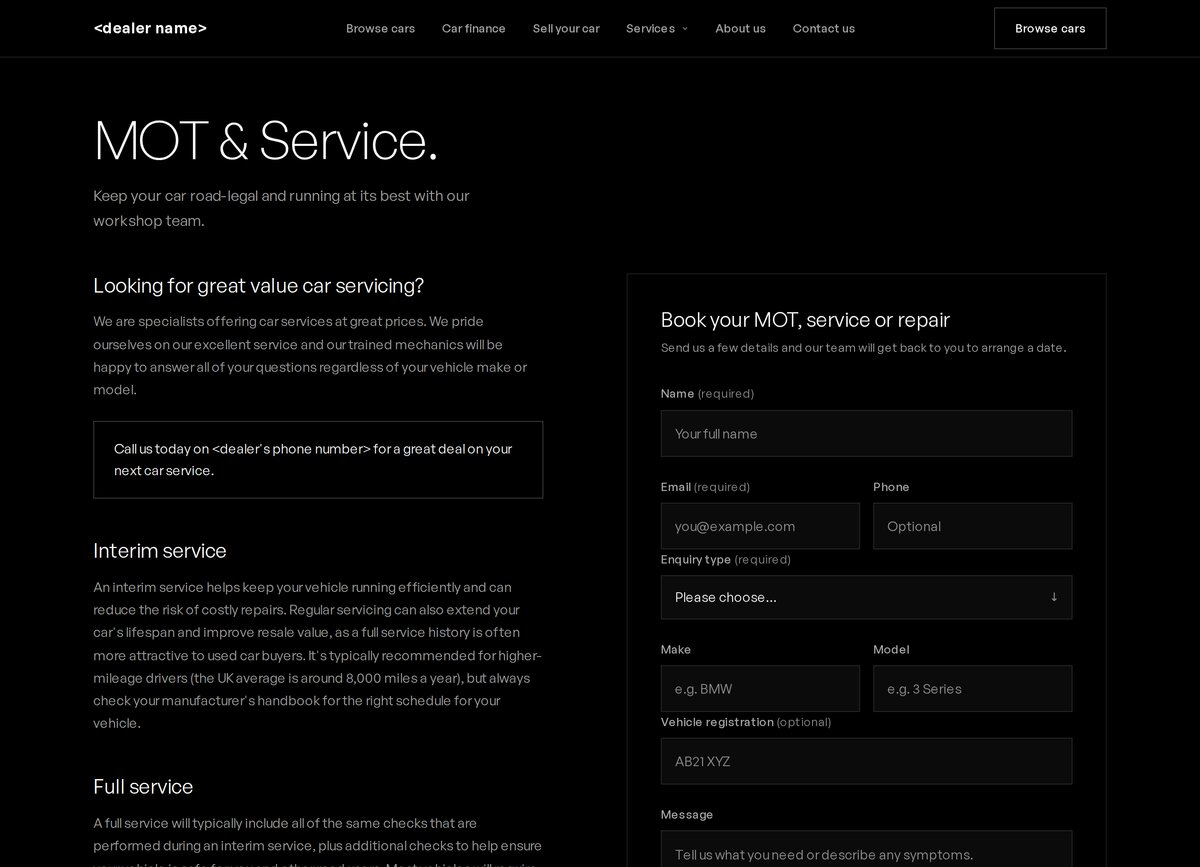
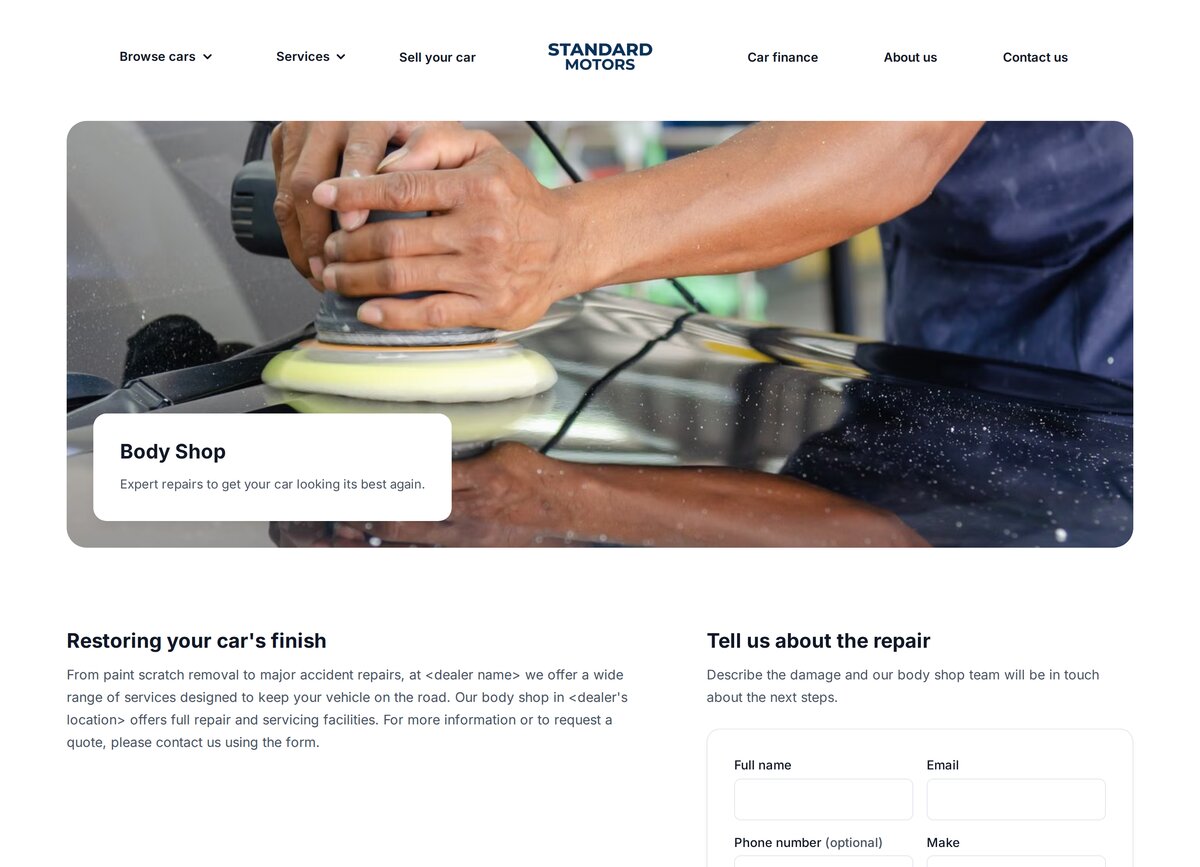
For the first few weeks I was thrown by how different the process had become. Then it clicked, and designing this way made far more sense to me than pushing pixels around in Figma.
Where the care went. Mostly compliance and accessibility
Two constraints shaped nearly every decision.
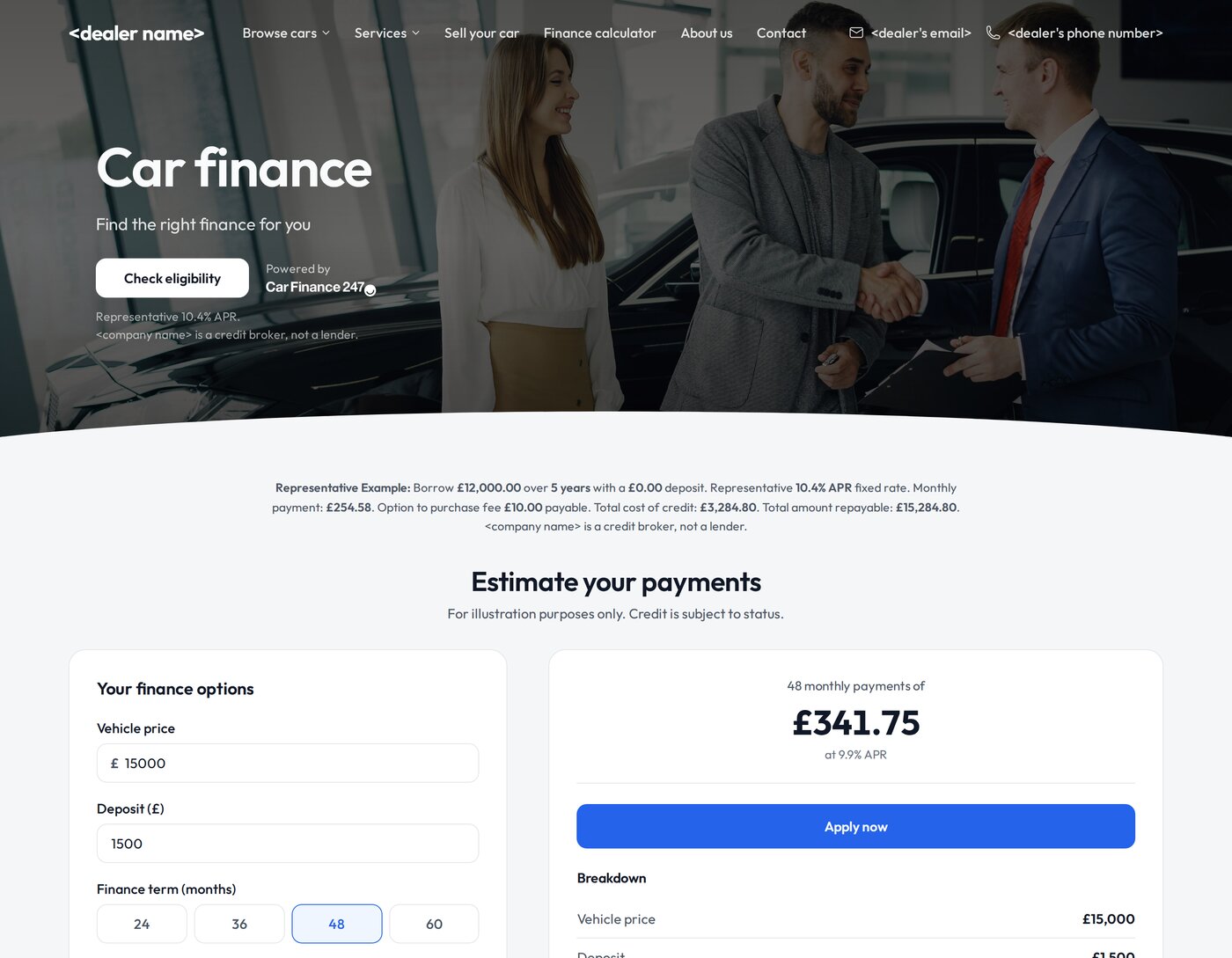
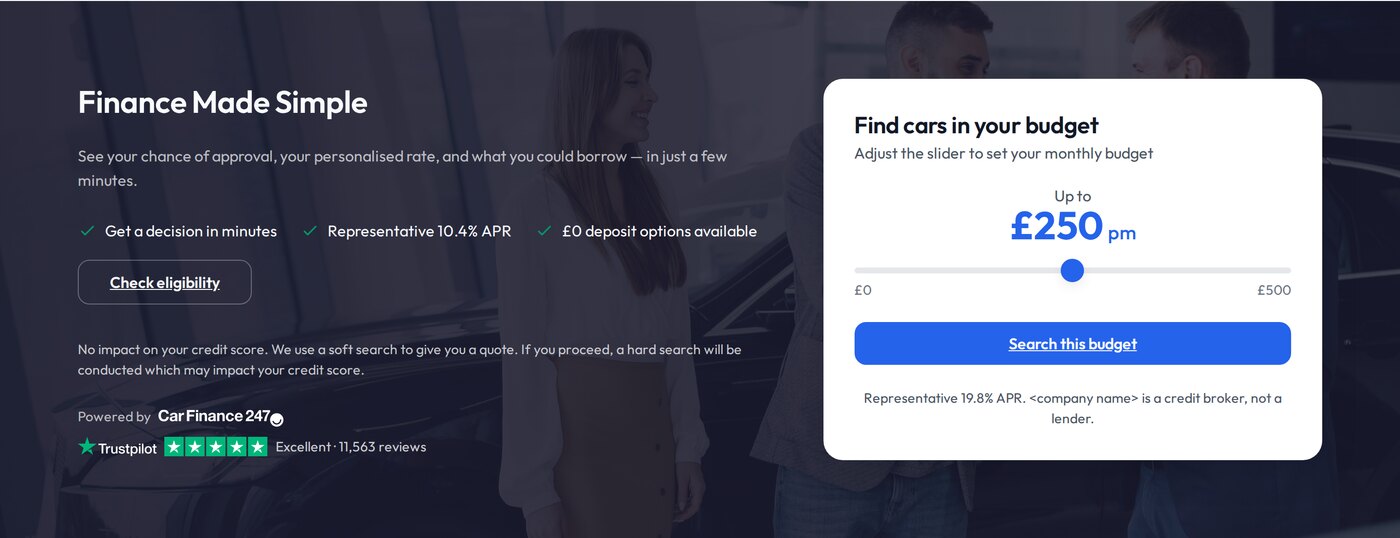
The first was FCA compliance. This is finance, so the representative example, the credit broker disclosure, the soft search wording and the rest all have to be correct and consistent on every page that shows a price or a payment. I worked with Risk and Compliance to get the templates right, then turned what we agreed into a repeatable pattern so the same wording and figures dropped into every new template without anyone having to reinvent them. That pattern became one of the bigger time savers.
The second was accessibility. The templates were built against WCAG 2.2 Level A, with proper contrast, visible focus styles and reduced-motion support so the premium animations calm down for anyone who asks for that. All the dealer specific data sat in the templates as clearly marked placeholders rather than real details, so nothing sensitive ever travelled with a prototype.
When it clicked, I was designing workflows, not screens
This is the part I will not dress up. At first the whole approach threw me. For the first 2 or 3 weeks I was overwhelmed by how different it all was, and honestly a bit unsure what my job even was now.
Then it clicked. I was not drawing screens any more. I was designing the workflow around them: the system, the tokens, the compliance patterns and the feedback loops that let a small team turn out good sites fast. I used the AI agent to build the prototypes, and other tools to generate images and video where we needed them. My job became knowing what good looked like, keeping the compliance and accessibility bar high, and steering all of it until it was right. The taste and the judgement were still mine. The typing got a lot faster.
What actually went out of the door
In 4 months we went from 1 standard template and 3 dealers to 4 standard and 3 premium templates, 7 in total. Those attracted more than 200 dealer leads. We put more than 25 dealer websites live and had another 30 or so in the backlog waiting to go.
The other win was time. The old 2 month, one-at-a-time process got faster wherever we could make it faster, largely off the back of the compliance feedback loop I set up, which took real pressure off the small team managing it all. The long term goal was to automate the whole pipeline, but the team was small, so I spent the time building the pieces that had to exist first rather than jumping to full automation.
I did not get to see the finance-application numbers move. I was let go before that data came in, so I am not going to claim an uplift I never saw. What I can stand behind is the throughput. A lot more good sites, live, a lot faster than before.